
Last reviewed: November 2026. This article is for general information and is not medical advice.
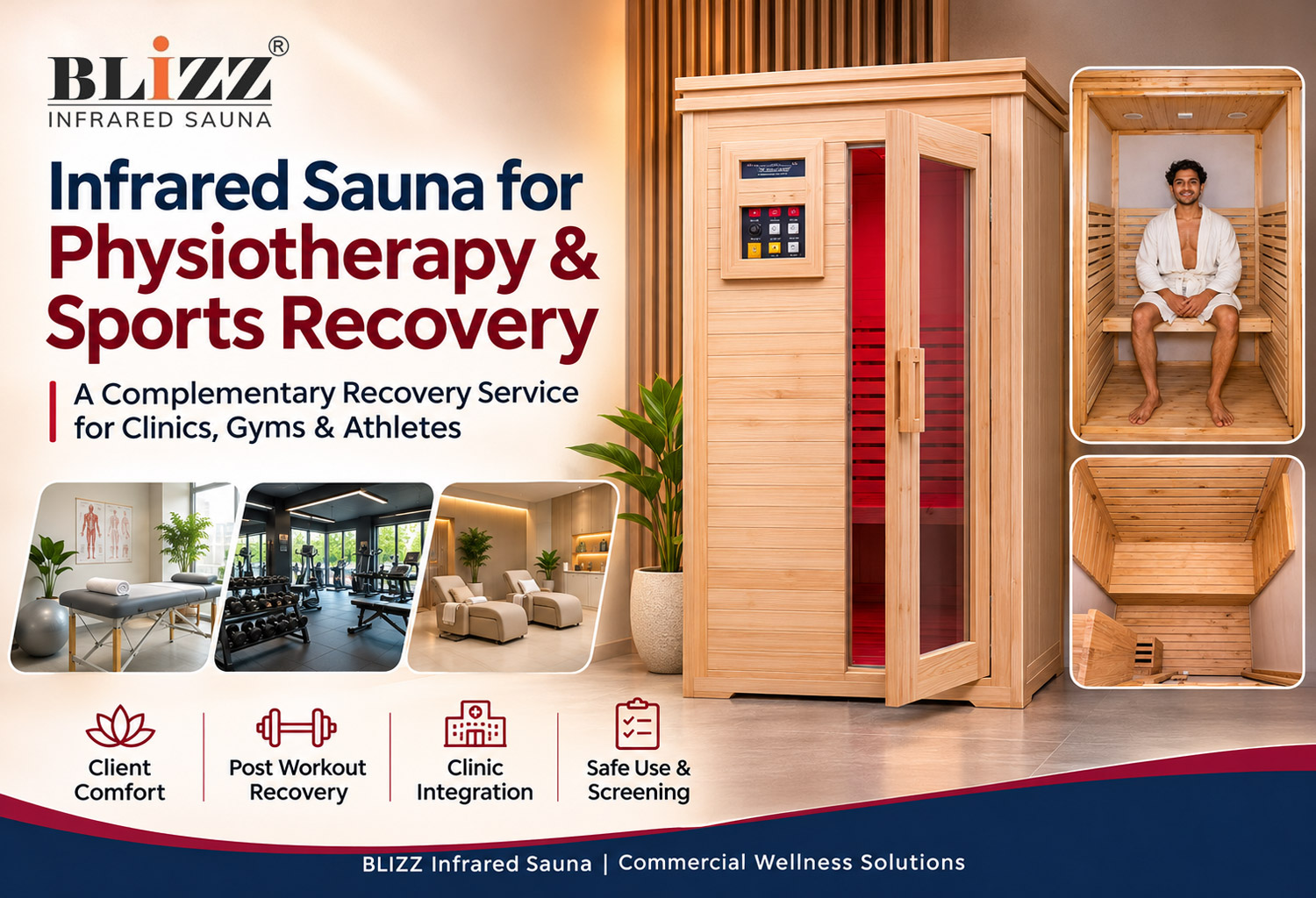
Physiotherapy clinics and sports recovery centres are always looking for ways to make a visit feel better for clients and keep them coming back. An infrared sauna is one of the options owners ask us about most. It is easy to run, comfortable for clients, and a natural add-on to a recovery space.
We manufacture infrared saunas, so we want to be direct about what it can and cannot do. This guide covers where it fits in a physiotherapy or sports recovery setting, what the research does and does not show, and how to set it up responsibly.
The Short Answer
- An infrared sauna is best positioned as a supportive, complementary recovery service, not as a treatment for injuries.
- Small studies on athletes show mixed results. One found less muscle soreness and better perceived recovery. Another found a benefit after endurance exercise but not after strength training.
- It is not a replacement for physiotherapy, exercise rehabilitation, or medical care.
- A good setup needs client screening, clear usage rules, and trained staff.
Why Centres Add an Infrared Sauna
- Client comfort. A warm, quiet session after training or a physiotherapy visit is something many clients enjoy and remember.
- A clear point of difference. Few clinics and recovery studios in India offer one, so it stands out.
- Extra revenue. It can be sold as a per-session add-on, a package, or part of a membership.
- Small footprint. An infrared cabin takes far less space than a steam room and needs no plumbing. A 4′ x 4′ cabin needs about 36 sq ft of floor area, and home-size cabins typically run on a standard 16 amp point. Check the exact requirement for your model with the seller.
What the Research Says About Recovery
Research on infrared sauna and exercise recovery is early and small. Two studies show the range of findings.
A 2023 study in Biology of Sport. Sixteen male basketball players did a heavy resistance and jump training session, then either rested for 20 minutes or sat in an infrared sauna at about 43 degrees Celsius for 20 minutes, one week apart. After the sauna session, the drop in jump performance was smaller, muscle soreness was less severe, and perceived recovery was higher. A single session did not harm autonomic recovery measures.
A 2015 study in SpringerPlus. Ten active men did a strength session or an endurance session, then took a 30-minute far infrared sauna, a traditional sauna, or no sauna. After endurance exercise, jump performance 30 minutes later was slightly higher with far infrared than with no sauna, and heart rate was lower than after the traditional sauna. After strength training, the researchers saw no difference from no sauna. The authors described the far infrared session as a very light load that is comfortable and relaxing.
How to read this honestly.
- Both studies were small and used healthy, active men.
- Results were mixed: helpful for soreness and perceived recovery in one, helpful after endurance only in the other.
- Neither studied injured patients or rehabilitation outcomes.
So it is fair to say infrared sauna may support comfort and perceived recovery for some athletes. It is not fair to say it speeds healing or treats injuries.
For the wider research picture, read Infrared Sauna and Longevity: What the Research Actually Says.
Where It Fits in a Physiotherapy or Recovery Centre
After training or competition. A short, comfortable session can be part of a cool-down routine for athletes and active clients.
As part of a recovery menu. Pair it with stretching, mobility work, massage, or a quiet rest area. A sauna works best as one piece of a wider routine, not a standalone fix.
For general relaxation. Many clients simply enjoy the downtime. That is a legitimate benefit for a wellness-focused clinic.
Not as a treatment. Do not offer it as a treatment for a specific injury, pain condition, or disease. Fresh injuries, swelling, and inflammation are areas where your treating physiotherapist or doctor should decide whether heat is suitable and when. Leave that judgment to a qualified clinician.
Screening and Safety for Your Clients
A sauna raises heart rate and causes sweating, so a short screening step protects your clients and your centre.
Ask about:
- Heart conditions, blood pressure problems
- Pregnancy
- Fever or current illness
- Regular medication
- Any serious medical condition
- Recent injuries or surgery, and whether their doctor has cleared heat
Set clear rules:
- Drink water before and after
- Start with short sessions and build up, within the guidance for your cabin
- No alcohol
- Leave at once if dizzy, nauseous, or unwell
- Clean surfaces and use towels between clients
Train your staff to recognise dizziness and faintness, and keep water available. For the full list of side effects and precautions, read Infrared Sauna Safety and Side Effects.
Choosing the Right Setup
- Size. Choose based on how many clients you expect at a time and how much floor space you have. Many centres start with a 1 to 2 person cabin.
- Build quality. For daily commercial use, look at the heaters, wood, glass door, and finishing. Ask about heater warranty and who services your city.
- Hygiene. Smooth, easy-to-clean surfaces and a clear cleaning routine matter in a shared space.
- Power and layout. Have an electrician confirm your wiring, and place the cabin on a level, dry floor with some ventilation.
Our Infrared Sauna Buying Guide for India lists what to ask any seller. For costs, see the Infrared Sauna Price in India Guide.
Pricing and Packaging Ideas
Rather than selling the sauna as a cure, many centres sell it as a comfort and recovery experience:
- Single sessions priced as an add-on
- Session packs for regulars
- Membership perk for clients on a recovery or training plan
- Team or club packages for local sports teams and gyms
Work out your own numbers from your session price, expected usage, and running costs. We do not promise a payback period, because it depends on your location, pricing, and occupancy. Our wellness centre guide shows how to think through the business case.
Wording That Holds Up
Clear, honest wording protects your credibility and keeps you on the right side of health advertising rules.
Language that works:
- “A comfortable recovery session after training”
- “Supports relaxation and wellbeing”
- “Part of your recovery routine”
Language to avoid:
- “Heals injuries” or “treats pain”
- “Detoxes your body”
- Any claim to cure or treat a disease
See why in Infrared Sauna and Detox: Fact vs Marketing.
Related Guides for Business Owners
- Infrared Sauna for Gyms in India
- Infrared Sauna for Spas and Resorts in India
- Infrared Sauna for Ayurvedic and Naturopathy Clinics
- Infrared Sauna for Business
- Infrared Sauna vs Steam Bath
Talk to Blizz
If you are planning a recovery space for your clinic or centre, our team can suggest a cabin for your space, budget, and client volume.
- Explore all Blizz models
- Call or WhatsApp +91 98250 38480 or fill the inquiry form. We respond within 24 hours.
FAQ’s
Can infrared sauna help with muscle recovery?
Early, small studies suggest it may support comfort and perceived recovery for some athletes. Results were mixed, and the studies involved healthy active men, not injured patients. It is not a replacement for physiotherapy or rest.
Is infrared sauna a physiotherapy treatment?
No. It is best seen as a supportive, complementary recovery service. Treatment of injuries should be decided by a qualified physiotherapist or doctor.
Can I use a sauna after an injury?
It depends on the injury and its stage. Ask your doctor or treating physiotherapist whether heat is suitable and when to start.
How long should a client’s session be?
A common range is about 15 to 30 minutes. New users should start shorter and build up. Stop if the client feels unwell.
What space does a physiotherapy or recovery centre need for an infrared sauna?
A 1 to 2 person cabin needs around 36 sq ft of floor area for a 4′ x 4′ size, plus room to open the door and move around. Confirm the exact size and power requirement for your model with the seller.
What should we ask clients before they use the sauna?
Ask about heart conditions, blood pressure, pregnancy, fever or illness, regular medication, recent injuries or surgery, and any serious medical condition. Advise anyone unsure to check with their doctor first.
Sources
- Infrared sauna session after resistance exercise and recovery of neuromuscular performance and muscle soreness in basketball players. Biology of Sport, 2023: abstract
- Mero A, Tornberg J, Mantykoski M, Puurtinen R. Effects of far-infrared sauna bathing on recovery from strength and endurance training sessions in men. SpringerPlus, 2015: University of Jyvaskyla record
- Beever R. Far-infrared saunas for treatment of cardiovascular risk factors: summary of published evidence. Canadian Family Physician, 2009: PubMed
Blizz Infrared Sauna is India’s No. 1 far infrared sauna manufacturer, with 500+ installations across homes, gyms, spas, hotels, and wellness centres. Explore our models